Rabu, 19 Januari 2011

One Day in Perth Australian


Town of Perth beautiful is place of wisata pleasant to all modern turis. Exciting and full of colour, this Town Light located in Swan River, crowded with various attraction and activity to be is immeasurable of appetite. Environmental in Perth suited for relaxing, friendliness and is open - following there are some choice of this friendly town, adding desire of You have journey.
This fact possible surprise, especially to people of Prancis very proud of their grape;wine - Australian now is biggest out of job exporter to English and biggest second exporter to America. Last Some years, grape;wine of Australian only
will be laughed at by all connoiseur, but now shall no longger.In Perth, wistawan can visit various plantation type yielding best grape;wine and Swan Valley one of them
Visitor can enjoy to take the air easy going alongside concevutive vineyards and live in one of the accomodation and lodging which on the market. Of course, You also can enjoy to taste good grape;wine with quality at the price of very is reached. If You have budget and time, ascertaining to conduct romantic journey fringe River of Swan to enjoy view of is overall of that dale.
Kangaroo is view of public in Perth. Even, many people surely will have story about how them see this humorous animal defect road;street, or even not intentionally bumping him. To tourist, visiting Garden Animal of Caversham is the way of best to see Australian national ikon and also typical animal of Other Australian like, like koala bear, Devil Tasmanian, owl and dingo
One other must be done here is to touch wombat and possible carrying on the back it! Children surely will like to take a ride camel and try to squeeze ox milk
Caversham Wildlife Park is its shade 2000 animal, a pleasant vacation to family which wish to enjoy wild animal and nature.

Maritime Nirvana of Derawan


A tropical nirvana reside in one of the regional island of Provinsi Kalimantan East, precisely Sub-Province of Berau and in Strait Sulawesi, do not far from frontier of Malaysia. Island of Derawan become a destination of wisata maritime of inviting choice make You taking a fancy to coast with soft white sand carpet gleam and also clear water. more than anything else added by bonus meet tame turtles which is blithe berenang-renang of our moment conduct diving
Sometimes moment sit in wood bridgehead which is flange to sea, we earn to witness that green turtles of downstream go upstream on the surface of water which is transparent. Once in a while even the turtles look to gallivante around cottage residing in coastal area of island. Night moment arrive, some turtle go ashore and lay eggs over there
Colour Paduan go out to sea and moss which make surprise to yield green and blue colour gradation, and also small forest in between, making this island present view of nature so respect darling to be overcome off hand. What remain, circumstantial memory.
Carden Wallace of Tropical Museum of Queensland, Australian have checked properties of Island sea of Derawan and meet more than 50 type of Arcropora sea animal in one rock terumbu. Do not be wrong presumably if Island of Derawan famous as third sequence to the in world as location dive to have international level
This island it is true relative less is so recognized specially in country because to reaching it of butuh devious separate struggle enough. You must go to Balikpapan first from Jakarta, Surabaya, Yogyakarta or of Denpasar, to go to this island. More or less two time clock go through air transport of Jakarta to Balikpapan
Of Balikpapan, You still have to fly to go to Foreland of Redeb during one hour by taking a ride small plane which served by KAL Star, Deraya or of DAS. Besides, Foreland of Redeb also can reach to pass sea, by taking a ride ship of Samarinda or of Tarakan to Foreland of Redeb continued with renting motorboat go to island of Derawan with journey llama more or less 2 hour.
Direct Redeb go to island of Derawan with motorboat which have been bound by in a special port
Other alternative can also through journey of land of Balikpapan to last Foreland Stone from there defect to Island of Derawan. just Only this non good choice because journey of crossing of itself eat time till flog hour with field which relative unpleasantly
Nonetheless, Your soybean cake, exactly many foreign tourist which have known the more problem existence of this exotic island. A number of Japan tourist of Tokyo pass travel exist in there “ direct shoot” go to Singapore or to Sabah later;then continue journey to Balikpapan, last to Foreland of Redeb use small plane
They exploit their time during in Derawan by diving, fringing the beauty of under sea in the island which it is true represent best location to be athletic dive. More than anything else with condition of cloistered island and “ still maiden” becoming add glamor no matter who to enjoying him during possible.

Jumat, 14 Januari 2011

Ujung Kulon National Park Tours


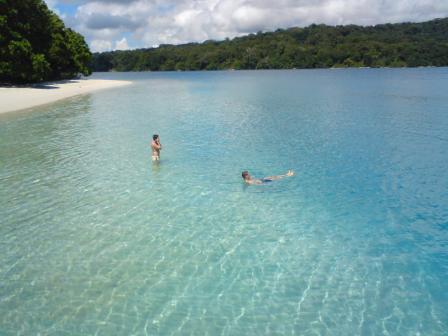
Ujung Kulon National Park is located at the western-most tip of Java, Indonesia. It includes the volcanic island group of Krakatoa and other islands including Handeuleum and Peucang. The park encompasses an area of 1,206 km² (443 km² marine), most of which lies on a peninsula reaching into the Indian Ocean.
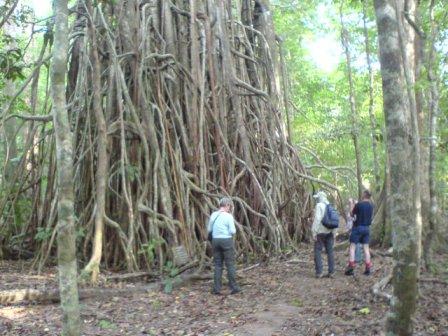
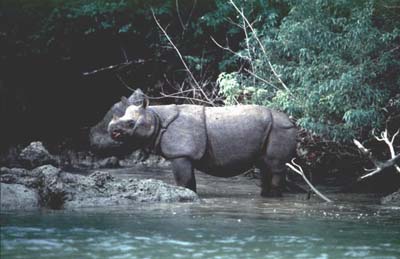
t is Indonesia’s first national park and was declared a UNESCO World Heritage Site in 1992 for containing the largest remaining lowland rainforest in Java. It is also one of only two homes of the critically endangered Javan Rhinoceros. A population of fifty to sixty live in Ujung Kulon, a smaller population of possibly 10 or less, live in Cat Tien National Park, Vietnam. The mainland part of Ujung Kulon was formerly farmland until it was devastated and depopulated by the 1883 eruption of Krakatoa after which it returned to its original forested state.

Permits for the park are available at the town of Labuan, where there is a National Park office. There is also an office at Tamanjaya. Accommodation is available on Handeuleum and Peucang islands.

Selasa, 11 Januari 2011

HOLIDAYS OF LOMBOK INDONESIA

PRICE EXCLUDES:
Any personal expenditure such as laundry, phone calls, tipping, etc
Soft drinks and alcoholic drinks
Return flight tickets Denpasar-Labuan Bajo-Denpasar of USD 195 per Person
Airport taxes of USD 5 per Person
Komodo Conservation Fund of USD 15 per Person
Day 03 KALONG-BIDADARI-LABUANBAJO DEPARTURE
05:30 Sailing to Bidadari Island
07:00 Snorkeling and swimming at Bidadari Island
08:30 Breakfast on boat while boat is sailing to Labuan Bajo
09:30 Arriving Labuan Bajo
10:30 Transfer to the airport for your onward flight
PRICE PER PERSON IN US DOLLAR
USD 900 – Twin Share
Single Supplement: USD 250
Join in Schedule in Dec-Jan 2011
Special Cruise only in December and New Year 2011

Dec 02-04, Spaces available is 08
Dec 06-08, Spaces available is 08
Dec 10-12, Spaces available is 08
Dec 14-16, Spaces available is 08
Dec 18-20, Spaces available is 09
Dec 22-24, Spaces available is 08
Dec 26-28, Spaces available is 07
Dec 28-30, Spaces available is 07
Dec 31-Jan 02, Spaces available is 06
Day 02 RINCA-KOMODO-PINK BEACH-KALONG
06:00 Sailing to Komodo Island
07:30 Breakfast on boat
08:30 Arrival in Loh Buaya, Komodo Island
09:00 Trek to Banunggulung to see Komodo dragons
11:00 Return to the boat and sail to Pink Beach
11:30 Snorkeling and swimming at Pink Beach
13:00 Lunch on boat
13:30 Sailing to Kalong Island
18:00 Watching thousands of bats flying out from their nets
20:00 Dinner and rest
Day 01 ARRIVAL LABUANBAJO-RINCA
11:30 Arrival Labuan Bajo, transfer to the harbor
12:00 Welcome Briefing on boat
12:30 Depart to Rinca Island, Komodo National Park
13:00 Lunch on Boat
15:30 Arrival Loh Buaya, Rinca Island
16:00 Trek to Waewaso to see Komodo dragons
18:30 Return to the boat
20:00 Dinner and rest

Samosir Cottages Toba North Sumatra – Indonesia


Soak up the sun, swim in the clear waters of the lake,enjoy the real nature and the peacefull of the island, relax to the sounds of traditional music… visiting Lake Toba is an experience you will not forget!

Samosir Cottage is ideally located in the heart of Tuk Tuk village overlooking the magnificent Lake Toba. Samosir Cottage offers a friendly, relaxed atmosphere in comfortable surroundings with many amenities. All cottages are situated on the lake and have view over the lake, we offer a range of sporting and relaxation activities. Please feel free to browse through our site to find out more about Lake Toba and for the opportunity to see first hand the beauty of our lake through our gallery.

Visit Lake Toba and stay with us. With all the facilities that we have, it will even make your staying more comfortable and enjoyable.
Keep contact with your famile or do an online working while your staying, that is all possible with our FAST NEW INTERNET CABLE CONNECTION.
ENJOY OUR NEW WIFI SERVICE

Samosir Cottages is proud to have a wide range of facilities to make sure your stay is truely relaxing. You can enjoy your stay without having to worry about anything at all. Leave all behind and make use of the facilities that Samosir Cottages offers you. A true vacation.

No need to wash with our laundry services, get entertainted Batak-style, stay in touch with the homefront using our internetcafe and we offer you all the tourist info you need.

Minggu, 09 Januari 2011

MOUNT PAPANDAYAN


MOUNT PAPANDAYAN
A visit to Mt. Papandayan is one of the most spectacular outings to an active volcano you can make. Golden sulphur crystals, hissing steam, boiling mud and water, blue and black creeks, all set in a large crater with a commanding view over the Garut Plain make this outing an unforget- table experience.

You can easily combine a visit to Mt. Papandayan with a weekend in or near Garut. Also, you can make it a one-day outing from Bandung, in which case you need a good seven to eight hours for the round trip. From Cipanas, expect a round trip to the Mt. Papandayan crater to take three to four hours.

MOUNT PAPANDAYAN NATIONAL PARK : Mount Papandayan is a complex stratovolcano, located in West Java, Indonesia. At the summit, there are four large craters, and it contains active fumarole fields. The 1772 eruption has truncated the volcano into a broad shape with two peaks and a flat 1.1 km wide of Alun-Alun crater in the middle. It looks like a twin volcano. One of the peaks is called Papandayan and the other is Mount Puntang.

This interesting place lies in the border of the Bandung and Garut regencies, about seventy kilometers south of Bandung and about 19,25 km from Garut. It is one if the most spectacular volcanoes in this province and the top of the mountain are easily reaches, because there are special road leading to the crater. Mount Papandayans crater is probably one of the most spectacular mountain scenes on Java Island. There is a Cangkuang temple situated by Cangkuang Lake, which was a major discovery of archaeological value as it was the first of its kind found in West Java, dating back to the 8th century. This volcano is situated 17 km from Garut or 50 km from Bandung.

Access to the mountain is easy with any vehicle. Public buses take you only to within 9 km of the crater, so you either have to walk the rest of the way or take an ojek (private motorbike with driver).

Though you can drive directly to the rim of the crater, keep in mind that your safety is not guaranteed—hot steam and boiling water and mud can scald you badly, and many of the sharp-edged rocks are rather loose. Do be careful.

There are two routes to Mt. Papandayan: one from the Garut area in the east and the other from the west via Pengalengan. Note that the two routes do not connect—not even a jeep can drive the 1 km across the crater.

From the east
The eastern approach from Garut is by far the easiest. Good roads take you right to the lower edge of the crater. Between Cipanas and Garut is the Tarogong roundabout, 42 km from the Cileunyi toll road exit. When you come from the north (Bandung or Cipanas), head toward Garut and Papandayan at the Tarogong roundabout. Half a kilometer past the roundabout, turn off to the right to bypass Garut and follow the Papandayan road sign. Continue on past the turnoffs to Kamojang (7km) and Darajat (9 km). Some 15 km from Tarogong the road connects with the main Garut-Cikajang road. After another 7 km, in Cisurupan, where the main road takes a sharp turn to the left, you go straight up the hill. From here it’s 9 km to the crater.

The road winds up the mountain, at times steeply, but is reasonably well surfaced and should not pose a prob- lem for any car. At the car park, park- ing and admission fees are required.

Approaching Mt. Papandayan across the Garut Plain, you can see the horseshoe-shaped crater with a gap- ing hole to the northeast. This open side resulted when, on 11 August 1772, a terrible eruption shook the mountain and the whole Garut area. What had once been a solid mountain flank exploded sideways across the Garut Plain.

Geologists estimate that several cubic kilometers, or several thousand million tons, of rock mass were blown out that night. If trucks were loaded with that mass and lined up bumper-to-bumper, they would encircle the earth three dozen times! Small wonder that more than 3,000 people lost their lives during that eruption.

From the car park it’s a 20-minute walk to the middle of the crater, and now you see why it is sometimes called the “Golden Crater’s—its cen- tral part is a dome of yellow sulphur. Sulphur vapor hisses out of many small fissures in the dome to form columns visible from far away.

Shining yellow crystals of crystallized steam are everywhere, and in one place have collected to form a statue-like figure more than 2-meters high. In earlier times local people channeled the steam through pipes to control this crystallization process to be used for commercial purposes. Be extremely careful not to step on one of these old brittle pipes, for it is likely to break and release scalding steam.

You may wish to take a few sam- ples of sulphur with you as souvenirs, but it would be best to wrap them first—sulphuric acid may form and burn holes in fabrics. Apart from sulphur deposits, boiling springs and streams flow in dark blue and gray colors. Be sure to avoid the soft patch- es of ground.

Through the open northwestern side of the crater a fantastic view stretches before you across the whole Garut Plain and as far as Mt. Ciremai near Cirebon, 80 km away The Mt. Papandayan crater is truly a visual feast. To the Mt.

From the west
The western route takes you to the upper crater rim through some mem- orable scenery. Be forewarned, how- ever, that long sections of the road are often in poor repair and only passable with a jeep. Public transportation is unreliable. You can drive up either the Cisangkuy Valley or the Citarum Valley to the village of Santosa and then on to Mt. Papandayan (see the relevant sections in “South of Ban- dung”). From Bandung you may need about four hours to reach the crater on this

Mahakam River Expedition to Heart of Indonesia


Kalimantan is the correct name for the Indonesian portion of the island known generically as Borneo. The Malaysian states of Sabah and Sarawak and the famed country, Brunei Darussalam constitute the remaining portions. Kalimantan is divided into four regions: East, West, Central and South Kalimantan. In East Kalimantan, the Mahakam River is the main route of access into this land of mystery, lore and vast eco-tourism. The former headhunters, the Dayaks traditionally live in communal longhouses called Lamin or Umaq Daru.
Steeped in tradition, the interior of the longhouse is typically divided into separate family quarters with a communal area connecting each of the quarters and therefore each of the families. It is in these communal areas that village meetings are held and ceremonies performed, thereby reinforcing the strong tribal bonds that have kept the Dayaks alive in the face of rapidly advancing 20th century technology.
The more remote and traditional tribes-people have pierced earlobes, which over the years have become stretched by the weight of heavy gold or brass rings, and beautifully elaborate tattoos. Local jewelry and designs are intricate and powerful, often giving messages to be passed down from generation to generation. The former headhunters; the large, remote orchid forests; the villages with “streets of wood”; and the ecologically interesting terrain create a journey surpassing all imagination and expectations. This is a journey back in time designed for the hearty explorer and eco-tourist.

DAY 1 – BALIKPAPAN / LOA JANAN
Transfer from Balikpapan to Loa Janan to board your “house-boat” for the start of the journey up the Mahakam river. Traveling along the extensive Mahakam river system, which has carved its way through the jungles and flatlands constantly reshaping and nourishing the land, is a fascinating adventure. The people, once believed to be headhunters, live in remote areas and along the rivers maintaining their beliefs in the supernatural and ancestral worship. Overnight on board. (Dinner)

DAY 2 – MUARA MUNTAI / TANJUNG ISUY
Tea with the Dayaks, the renown, former head hunters of Borneo, awaits you today. Visit Muara Muntai and its local floating market. A festive celebration with the Dayak village at Tanjung Isuy will crown this day. Be ready – Everyone Participates. Overnight on board. (Breakfast, Lunch, Dinner)

DAY 3 – TANJUNG ISUY / TENGGARONG
Travel from Tanjung Isuy to Tenggarong. Visit traditional long houses and explore the life of the Dayak villager. Birds, scenery, sights, and sounds abound – enjoy your time with nature and creation. (Breakfast, Lunch, Dinner).

DAY 4 – TENGGARONG / BALIKPAPAN
Visit the former Palace of the Sultan of Kutai, now an excellent museum. Note the gifts, origins and art on display. Journey down-river at a pace much faster than before as you now travel with the river. Arrive in time for dinner in Balikpapan.(Breakfast, Lunch, Dinner).

DAY 5 – BALIKPAPAN/ ONWARD JOURNEY
Bid farewell to Kalimantan as you are transferred to the airport for your onward journey and continuing visit to Indonesia. (Breakfast).

Mount Semeru Trekking


Mount Semeru or Gunung Semeru is the tallest mountain on the island of Java and one of its most active volcanoes. Known also as Mahameru (Great Mountain), it is very steep and rises abruptly above the coastal plains of eastern Java. Maars containing crater lakes have formed along a line through the summit. Semeru lies at the south end of the Tengger Volcanic Complex.

Semeru’s eruptive history is extensive. Since 1818, at least 55 eruptions have been recorded (10 of which resulted in fatalities) consisting of both lava flows and pyroclastic flows.

Semeru has been in a state of near-constant eruption from 1967 to the present. At times, small eruptions happen every 10 minutes or so.

Semeru is regularly climbed by tourists, usually starting from the village of Rano Pani to the north, but though non-technical it can be dangerous
DAY 01: SURABAYA – MALANG -RANUPANI
Upon arrival at Surabaya Airport, our guide meets you. Transfer by AC coach to Ranupani . Check in at Local Homestay, a simple accommodation. Overnight. ( D )
DAY 02: RANUPANI – RANU KUMBOLO -KALIMATI
Ranu Pani Village, the starting point to climb Mt. Semeru. Upon arrival, we start our trekking through the tropical rain forest of Mt. Semeru to Ranu Kumbolo in 3 hours continue walk to Kalimati. Kali Mati campsite ia another 3 hours trekking. On arrival, our guide team will prepare your lunch while you relax and enjoy the surrounding’s view. Overnight in tent (B, L, D).
DAY 03: SUMMIT of MT. SEMERU – RANU KUMBOLO
Early morning wake up! We climb to the summit of Mount Semeru (3,676 M). Reach the crater’s rim in 2,5 hours walking, watch sunrise if arrive early. Taking Photograph and some rest then descend down base camp for breakfast. Trekking back to Ranupani We proceed to Ranukumbolo for another overnight, here you’ll appreciate the beauty of surrounding’s nature (B, L, D).
DAY 04: RANU KUMBOLO – RANU PANI – CEMORO LAWANG
Morning after breakfast we return to Ranu Pani Village. By 4 Wheel-drive Jeep, we drive you on to Cemoro Lawang Village crossing the Bromo’s Sea of Sand area for your overnight stay at the closest situated hotel to the Caldera, Bromo Permai Hotel or Similar (B, L,D).
DAY 06: MT. PANANJAKAN & MT. BROMO – SURABAYA AIRPORT – DEPARTURE
Another early morning wake up! By 4 wheel-drive Jeep we drive you up to Mt. Pananjakan (2,770 M asl) for a spectacular view of sun rise over Mt. Bromo and it’s sea of sand. Trekking up to the rim of Mt. Bromo’s for close up view of it’s smoking crater. Return to hotel for breakfast. By Air-conditioned car we drive you in 3 hours journey to Surabaya Airport for your flight to your next destination (B)

MOUNT MERAPI TREKKING


Merapi Mountain (Gunung Merapi) is the most active volcano on Sumatra island (50 eruptions since 18th century). Its elevation is 2,891 m. It is located near the centre of Minangkabau culture – Bukittinggi.

Merapi Mountain is the most important mountain for Minangkabau people. In Tambo (Minang literature) it is told that first people arrived to West Sumatra when all the Earth was covered by sea. They landed on the only piece of land that juts out of the water – the top of Merapi Mountain. In the region, you can find a lot of burial stones oriented in the direction of Merapi mountain. This fact shows her spiritual and cultural importance.

There is two ways to the top. We recommend starting climbing in early morning from Koto Baru, which you can reach from Bukittinggi. Through a rainforest you arrive to the part with sparse vegetation where a beautiful view will open in front of your eyes. You can see the opposite Singgalang Mountain, Padang Panjang and Bukittinggi towns. After this the rocky part starts and it is useful to make a tent under the rocks and spent a night there, before the hike to the top. The second day in the morning you reach the main crater and the 4 peaks of the volcano. Except of the main crater full of smoke you can see a lot of smaller craters.

After passing this area you arrive to the so called “Edelweiss gardens”. Edelweiss flower is a symbol of endless love for Minangkabau girls. From this point, there is a wonderful view on the Maninjau Lake and Indian Ocean. Than you go through the fern vegetation to the rainforest level again. In the afternoon you arrive to Pariangan village.

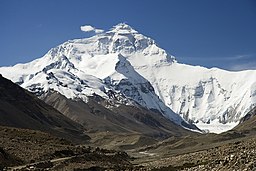
Himalayas mountain


The Himalaya Range (Sanskrit: literally, "abode of snow", Sanskrit: Devanagari: हिमालय, IPA: /hɪˈmɑːləj(ə)/), the Himalayas or Himalaya for short, is a mountain range in Asia, separating the Indian subcontinent from the Tibetan Plateau. By extension, it is also the name of a massive mountain system that includes the Karakoram, the Hindu Kush, and other, lesser, ranges that extend out from the Pamir Knot.

Together, the Himalayan mountain system is the planet's highest, and home to the world's highest peaks, the Eight-thousanders, which include Mount Everest and K2. To comprehend the enormous scale of this mountain range, consider that Aconcagua, in the Andes, at 6,962 metres (22,841 ft) is the highest peak outside Asia, whereas the Himalayan system includes over 100 mountains exceeding 7,200 m (23,622 ft).[1]

Some of the world's major rivers, the Ganges, Indus, Brahmaputra, Yangtze, Mekong, Salween, Red River (Asia), Xunjiang, Chao Phraya, Irrawaddy River, Amu Darya, Syr Darya, Tarim River and Yellow River, rise in the Himalayas, and their combined drainage basin is home to some 3 billion people (almost half of Earth's population) in Afghanistan, Bangladesh, Bhutan, People's Republic of China, India, Nepal, Burma, Cambodia, Tajikistan, Uzbekistan, Turkmenistan, Kazakhstan, Kyrgyzstan, Thailand, Laos, Vietnam, Malaysia and Pakistan.

The Himalayas have profoundly shaped the cultures of South Asia; many Himalayan peaks are sacred in Hinduism, Buddhism and Sikhism. The main Himalaya range runs west to east, from the Indus river valley to the Brahmaputra river valley, forming an arc 2,400 km (1,491 mi) long, which varies in width from 400 km (249 mi) in the western Kashmir-Xinjiang region to 150 km (93 mi) in the eastern Tibet-Arunachal Pradesh region. The range consists of three coextensive sub-ranges, with the northernmost, and highest, known as the Great or Inner Himalayas.